Shared article
Samurai and Ninja Were Not Opposite Castes: How Rank, Mission, and Equipment Made the Difference
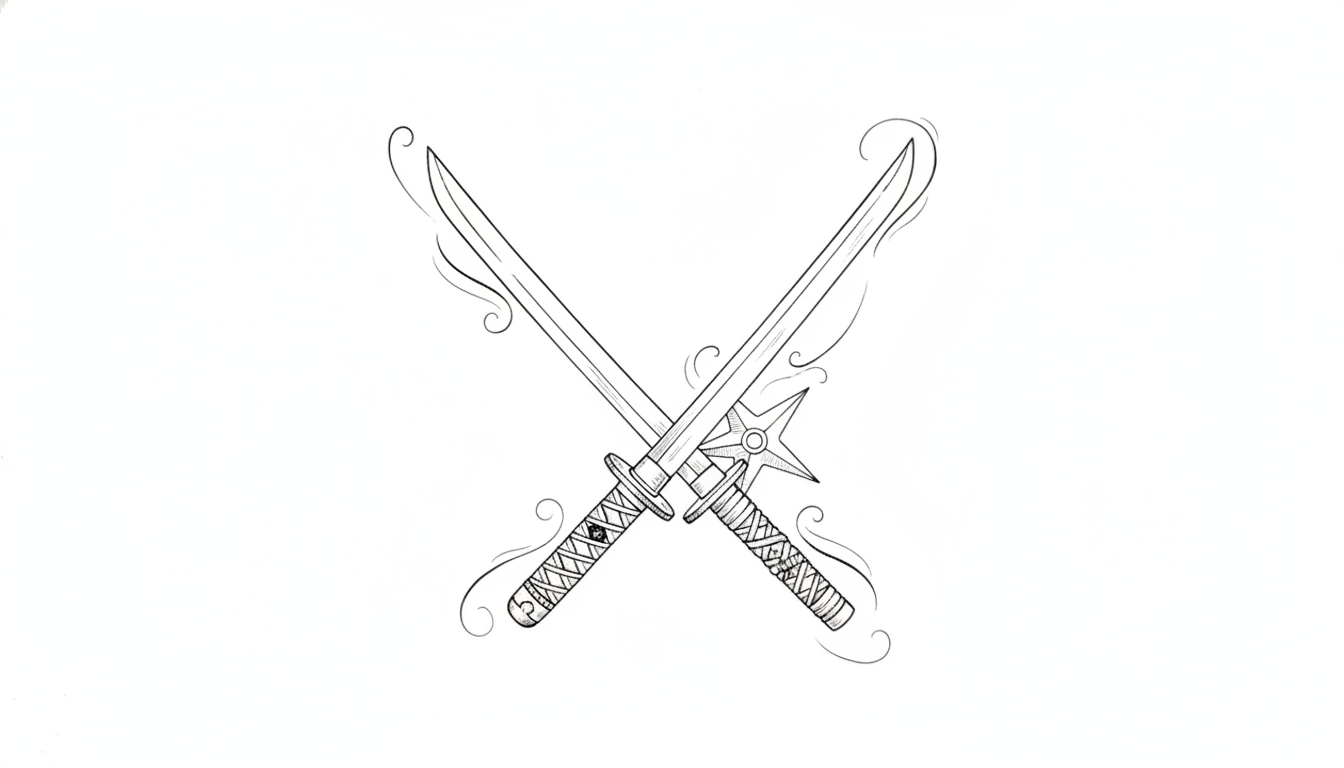
The Ninja-Samurai Rivalry Begins with a Historical Mismatch
Chapter 1
Hattori Hanzō appears in period records as a samurai general serving Tokugawa Ieyasu and commanding men from the Iga region. Yet later popular culture recast him as the archetypal ninja master. The Iga-mono who served Ieyasu were presented as retainers performing specialized functions, not simply as members of an order outside the samurai world.
That mismatch opens a larger question. Were samurai and ninja separate kinds of people, or could the same military system assign different work to people with overlapping backgrounds? The answer lies in the level at which the terms operated. Samurai identified a recognized position within Japan’s political and military order. Shinobi, or ninja, generally described covert assignments such as intelligence, infiltration, reconnaissance, surprise attack, and other work dependent on concealment.
The distinction, then, was less a contest between two hereditary castes than a difference between visible status and operational function. Open warfare and covert action solved different military problems, but those differences did not automatically produce separate social classes. Following the distinction through rank, deployment, training, and equipment explains how covert work could operate inside samurai-led forces—and why later memory turned a flexible assignment into a separate ninja type while preserving the samurai as a visible social category.
Samurai Were a Recognized Status; Shinobi Described a Function
Chapter 2
Samurai was a status within a political hierarchy; shinobi generally described covert work. By the Edo period, samurai standing had a standardized order that included gokenin, goshi, and hatamoto. These categories were tied to service to a lord and to political position. A daimyō governed a domain and its people, while hatamoto and gokenin held distinct places among the shogun’s direct retainers. Rank therefore located a person within an administrative and military relationship to a particular lord, not merely on a scale of fighting ability.
The hierarchy had formal distinctions. Hatamoto were bannermen with the right to be received in audience by the shogun; gokenin were shogunal housemen without that privilege. An official survey of 1722 listed about 5,200 hatamoto and more than 17,000 gokenin. Such categories show what made samurai status institutional: it was recorded, ranked, and connected to government and service.
Shinobi or ninja terminology worked differently. It generally referred to covert agents, not to a rank equivalent to hatamoto or gokenin. The term identified an assignment—gathering information, gaining access, scouting, disrupting an opponent, or conducting another concealed operation—rather than a standardized legal position. Historical shinobi could therefore operate within samurai-led structures because covert expertise served the same lords who organized open armies and administrative households.
The Iga-mono serving Tokugawa Ieyasu illustrate the overlap. They were presented as retainers performing specialized functions, while Hattori Hanzō appears in period records as a samurai general commanding Iga-region men. “Samurai” answered who a person was within the political order; “shinobi” often answered what work that person performed. Treating the terms as parallel castes obscures the difference between institutional status and assigned function.
Open Military Service and Covert Access Solved Different Problems
Chapter 3
Once status and function are separated, the practical division comes into focus. Samurai were associated with open military service and battlefield combat. Their deployment made a lord’s power visible: armed retainers assembled as a recognizable force, fought in the field, and represented the authority of the political household that sent them. Bows, long spears, and swords could support that service, but its defining feature was the public, conventional character of the assignment.
Shinobi work addressed problems that an openly deployed force could not easily solve. Covert agents were associated with stealth, espionage, scouting, and operations requiring access or information without announcing the source of the effort. Accounts of shinobi functions identify espionage, reconnaissance, surprise attack, disruption or agitation, and arson among their activities. These methods could reveal an opponent’s plans, reach a protected place, unsettle an enemy, damage resources, or create an opportunity before a main force had to fight.
Intelligence was central to this work. Shinobi operational doctrine prioritized collecting information and avoiding unnecessary fighting as much as possible. That priority did not make shinobi incapable of combat, nor did it prevent samurai from using deception, scouting, surprise, or fire. Military organizations could draw on many methods, and an agent’s task could change with circumstances. The distinction lay in mission emphasis: open service made force and allegiance visible, while covert deployment sought results through concealment, access, knowledge, or disruption.
The two roles were therefore complementary. A lord might need retainers able to fight openly and personnel able to learn about an enemy before battle, enter an area without the full force, or create disorder behind an opponent’s lines. The same political structure could value both kinds of service. Iga-region men within Tokugawa service matter for precisely this reason: covert capability could be incorporated into a samurai-led force instead of forming a rival army with a separate social identity.
The popular binary adds a moral contrast that the operational evidence does not require. The useful distinction concerns the problem each deployment was designed to solve: visibility aided battlefield authority, while concealment aided intelligence and access. Neither description, by itself, establishes a separate caste.
Ninjutsu Was an Operational Curriculum, Not a Single Secret Fighting Style
Chapter 4
Training reinforces the operational distinction without placing shinobi in an entirely separate martial world. The Bansenshūkai and the Shōninki are major historical ninjutsu manuals. They preserve organized knowledge about shinobi practice, but their contents point toward a flexible curriculum rather than a single standardized fighting style. Ninjutsu addressed the demands of covert missions, which extended well beyond hand-to-hand combat.
The curriculum included unconventional warfare, strategy, specialized weapons, geometry, meteorology, and breathing techniques. Those subjects fit practical problems of movement, concealment, timing, orientation, and survival under uncertain conditions. Geometry could support an understanding of spaces and distances; meteorology could bear on movement and planning; breathing techniques could support control and endurance. The breadth of this knowledge is the important point.
The Shōninki’s concern with how a shinobi was expected to think makes the same case from another direction. A covert agent needed judgment about when to act, how to remain concealed, what information mattered, and whether direct confrontation would endanger the larger mission. Technical proficiency was inseparable from assessment. Someone who fought skillfully but exposed the operation could fail, while someone who avoided a fight and returned with useful information might succeed.
Samurai martial practice was associated with bows, long spears, and swords, and higher-status samurai carried the katana and wakizashi as a paired two-sword set. Those weapons belonged to the visible military culture of the warrior order and supported open conflict. The contrast, however, does not create two sealed curricula. Both roles existed in the military world, and personnel could possess overlapping skills. A samurai might scout or use surprise; a shinobi might fight when concealment failed or combat became necessary.
The difference was adaptation and emphasis. Samurai training was connected to formal weapons and open military service, while ninjutsu organized knowledge around unconventional warfare and covert missions. Calling ninjutsu a secret, universal “ninja fighting style” reverses the relationship between means and ends. The manuals are better understood as evidence of mission-oriented knowledge, in which judgment, concealment, and information could matter more than a decisive exchange of blows.
The Equipment Difference Was Visibility Versus Adaptability
Chapter 5
Equipment offers a material test of the distinction—and reveals how strongly later imagery has shaped modern expectations. The samurai toolkit was a visible military and status package. It included the daishō pairing of katana and wakizashi, alongside bows, spears, armor, and other battlefield equipment. The paired swords were not merely instruments for fighting. In the warrior order, such arms could express recognized standing as well as readiness for combat.
Shinobi equipment was organized less as a fixed status display than as a set of possibilities for covert work. Tools and specialized weapons attributed to shinobi were associated with grappling, infiltration, stealth, and sabotage. Their value lay in what they enabled: movement through difficult spaces, entry where ordinary access was restricted, damage to an opponent’s resources, or reduced conspicuousness. The practical question was what a mission required and which object could perform that function without drawing attention.
That distinction corrects the familiar image of the ninja dressed entirely in black. The all-black outfit is a later theatrical and popular-culture convention, not a reliable description of ordinary historical shinobi equipment. Its visual force comes from making invisibility immediately legible to an audience. It should not be mistaken for evidence that historical covert agents belonged to a uniformed profession with a standard costume. Concealment could depend on adapting to circumstances rather than wearing a universally recognizable “ninja” outfit.
The same caution applies to weapons. A covert operative might use a specialized implement, but such tools do not establish an inventory carried by every shinobi. Nor does a sword prove that its owner was a samurai in the social sense or that a covert assignment had become open battlefield service. Objects moved across situations. Their meaning depended on the relationship among the item, the mission, and the status it represented.
The daishō makes the contrast especially clear. As a katana-and-wakizashi pairing associated with higher-status samurai, it belonged to a recognizable material language of warrior standing. Bows, spears, armor, and related equipment further situated the wearer within open military service. Shinobi tools, by contrast, gained their usefulness from concealability, adaptability, or resemblance to ordinary objects. They served entry, communication, grappling, stealth, or sabotage rather than announcing a place in the hierarchy.
Equipment confirms the larger argument without making it absolute. Samurai and shinobi did not possess mutually exclusive technological worlds; they operated within the same military environment, and weapons could overlap. But the objects were selected and interpreted differently. Samurai arms made service and standing visible. Covert tools made a mission possible while minimizing notice. The physical difference was visibility versus adaptability, not a permanent costume boundary between opposing peoples.
The Tokugawa Order Preserved the Status and Obscured the Role
Chapter 6
The historical question resolves around what endured after the political conditions of the Sengoku period changed. During that era of warfare and competition among powerful clans, there was demand for people able to conduct espionage, sabotage, infiltration, and assassination. Such assignments made covert expertise valuable, but they did not necessarily create a formally ranked class parallel to the samurai hierarchy. As unification proceeded, personnel with those skills could be absorbed into the service of larger political households.
The Tokugawa order made the difference in visibility more pronounced. Samurai service endured within the governmental order, with ranked retainers and their relationships to lords remaining institutionally visible. Shinobi, by contrast, became less visible as an independent image. Covert work did not thereby become impossible or historically irrelevant; it was simply less likely to appear in later memory as a durable social category comparable to samurai status. The operational role could be folded into ordinary structures of service even as the rank of the person performing it remained the more publicly legible fact.
Hattori Hanzō is therefore a useful guide to the problem. His association with Iga-region service supports the reality of specialized covert personnel, while his appearance in period records as a samurai general challenges the assumption that “ninja” and “samurai” name opposing castes. The later ninja image separated the concealed mission from the political order that employed it. The samurai, meanwhile, remained recognizable through rank, retainership, weapons, and government.
Samurai and ninja were therefore different chiefly in the level at which the terms operated. Samurai identified a recognized status within a lordly and governmental hierarchy. Shinobi identified a covert function whose tools, training, and methods were adapted to intelligence, access, disruption, and surprise. The Tokugawa order preserved the first as a visible institution while obscuring the second as an independent category. What later culture remembered as two rival warrior types was more often a durable social rank joined, when circumstances required, to a less visible operational role.
Bibliography
- Real History of Samurai and Ninja: Facts vs Film. https://samuraimuseumtokyo.com/samurai-ninja-history/
- The Polity of the Tokugawa Era — Japan Society. https://japansociety.org/news/the-polity-of-the-tokugawa-era/
- The Covert Ninjas of Japan | KCPJapanese Language School. https://www.kcpinternational.com/2013/07/ninjas/
- Real Ninja History Tokyo | Samurai & Ninja Museum with Experience Asakusa. https://samuraininjamuseum.com/shinobi-real-history
- Samurai - World History Encyclopedia. https://www.worldhistory.org/Samurai/
- Ninja vs Samurai: The Iga Revolt and the Rise of Tokugawa • Spotter Up. https://spotterup.com/the-iga-revolninja-versus-samurai-the-iga-revolt-and-the-rise-of-tokugawa-t-and-the-rise-of-tokugawa-the-battle-that-shaped-japans-future/
- Ninja vs Samurai: The Real Historical Relationship - Shinobi-Arts. https://shinobi-arts.com/en/history/ninja-vs-samurai-real-history/
- Shinobi vs. Samurai — What’s the Difference?. https://www.askdifference.com/shinobi-vs-samurai/
- Ninja vs. Samurai - What's The Difference | InsideJapan Tours. https://www.insidejapantours.com/blog/2019/12/06/ninja-vs-samurai/