Shared article
The Fire on Breed's Hill: How a Tactical Loss Forged American Resolve
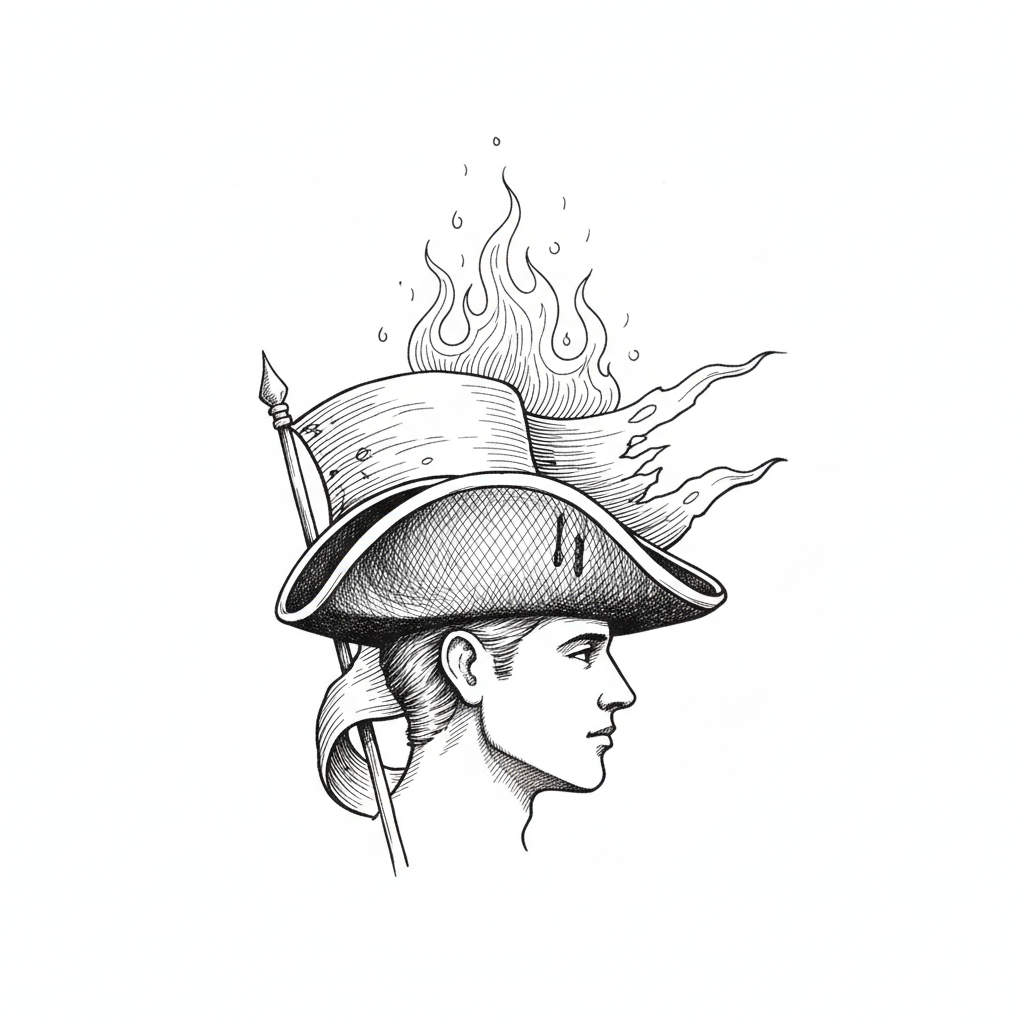
Introduction: The Unseen Costs of a 'Victory'
Chapter 1
On a sweltering Saturday in June of 1775, a battle unfolded on the rolling hills of Charlestown, across the water from British-occupied Boston, that would forever alter the trajectory of a nascent revolution. The smoke had barely cleared when General William Howe, commanding the formidable British forces, could claim a victory. His redcoats had driven the tenacious American rebels from their improvised earthworks, securing the strategic heights. Yet, for many of the King's officers who surveyed the horrifying carnage on Breed's Hill, the taste of triumph was bitter, coated in the metallic tang of blood and the acrid smell of spent powder.
This was no ordinary triumph; it was a victory so costly it became a profound paradox. While the British technically achieved their objective, the sheer scale of their casualties delivered a shockwave that reverberated from Boston to London, fundamentally reshaping their military strategy and challenging the long-held assumptions of colonial inferiority. For the Americans, though forced to retreat, the engagement was nothing short of a revelation. It proved, definitively, that their citizen-soldiers, despite their inexperience and scarcity of resources, could stand their ground against the most powerful professional army in the world.
The Battle of Bunker Hill, as it came to be known, was less a single battle and more a crucible where American resolve was forged in fire. It was a pivotal moment where individual acts of courage, strategic gambles, and logistical failings converged to transform a regional uprising into an undeniable struggle for self-determination. The story of this bloody day is not just about a tactical outcome, but about the human drama and the profound moral boost that irrevocably shifted the colonial psyche from protest to outright revolution, setting the stage for the dramatic fight for independence that lay ahead.
The Brewing Storm: Boston Under Siege and the Race for the Heights
Chapter 2
The air in Boston in the spring of 1775 crackled with an almost palpable tension. Following the skirmishes at Lexington and Concord two months prior, the British forces under General Thomas Gage found themselves effectively prisoners in their own occupation. A ring of determined, if somewhat disorganized, colonial militias had tightened around the city, transforming it into a siege. Every road out, every approach, was watched by men eager to avenge perceived slights and defend their liberty. Boston Harbor, the vital artery for British resupply, was becoming increasingly vulnerable.
Within this crucible, both sides understood the critical importance of the surrounding high ground. Across the narrow Charles River, the Charlestown peninsula offered commanding views of Boston, the harbor, and its approaches. Specifically, Bunker Hill and its slightly smaller, closer neighbor, Breed's Hill, were strategically vital. Whoever controlled these heights could rain down cannon fire upon the city or effectively blockade the harbor, tightening or breaking the British grip. For weeks, neither side had moved to seize them, a tense stalemate defining the landscape.
Then, a piece of vital intelligence reached the American Committee of Safety: General Gage was preparing a move. The British planned to occupy and fortify the Charlestown heights, beginning on June 18th, aiming to break the suffocating siege. This news spurred the colonists into immediate action. On the night of June 16th, a detachment of approximately 1,200 militiamen, under the command of Colonel William Prescott, was dispatched with an urgent, audacious order: fortify Bunker Hill and challenge British authority directly, before it was too late. This desperate race for the high ground was the immediate spark for the looming confrontation.
The Night of Shovels and Secrets: Constructing the Redoubt on Breed's Hill
Chapter 3
As darkness fell on June 16, 1775, a silent, determined procession moved out from the American lines, their footsteps muffled by the soft earth of the Charlestown peninsula. Under the experienced, watchful eyes of Colonel William Prescott and General Israel Putnam, a contingent of approximately 1,200 American militiamen began their covert ascent. Their initial orders had been to fortify Bunker Hill, the larger, more distant of the two prominent elevations. But as they assessed the terrain, a fateful decision was made.
Prescott, a seasoned veteran of colonial wars, and his fellow officers recognized the tactical advantage of Breed's Hill, a slightly lower but far more forward position, much closer to the British guns in Boston. It was a bolder, riskier choice, placing them squarely in the enemy's sights, but it offered a better command of the harbor and promised a more direct challenge. So, under the cover of a clear, starlit night, the men began to dig, their shovels and picks scraping against the earth with hushed urgency.
The hours that followed were a testament to sheer human will and improvisational engineering. Throughout the night, with the constant fear of discovery looming, they toiled to construct a formidable defensive position. They raised a square earthen redoubt, a fortress of packed earth and timber, its walls rising six feet high, designed to offer cover from musket and cannon fire. Extending from the redoubt were lines of breastworks, hastily thrown-up earthen barriers, stretching down the slopes. By dawn, a miraculous transformation had occurred: where there had been an empty hill, now stood a defiant, albeit unfinished, colonial stronghold. The British awoke to an astonishing sight—a newly constructed fort, bristling with the promise of rebellion, directly under their noses, forcing their hand.
The Unyielding Line: American Defenses and the 'Whites of Their Eyes'
Chapter 4
With the rising sun on June 17th, the British high command in Boston stared in disbelief at the audacious earthworks crowning Breed's Hill. Colonel William Prescott, the American commander, knew his position was exposed, a salient thrust into enemy territory, but his men had worked tirelessly. Their defensive setup, though rudimentary, was strategically brilliant. At the heart of it was the main redoubt, a compact earthen fort providing strong protection. Extending from its eastern side were breastworks, earthen walls offering cover, leading down towards the lower ground.
Crucially, Prescott’s left flank, the exposed side closest to the water, was bolstered by a long, hastily constructed rail fence. This fence, originally designed for enclosing fields, was quickly reinforced with layers of hay and stones, creating a surprisingly effective barrier that stretched towards the Mystic River. This improvised fortification was pivotal; it funneled the anticipated British assaults, ensuring they would be concentrated and exposed to enfilading fire. Inside these defenses, the American militiamen, a mix of farmers, artisans, and laborers, clutched their flintlock muskets, their nerves taut with anticipation.
Their most critical limitation, however, was also their most closely guarded secret: ammunition was desperately scarce. Each man carried only a handful of musket balls and a limited supply of gunpowder. This dire shortage led to the legendary, though perhaps apocryphal, command attributed to Prescott himself: "Don't fire until you see the whites of their eyes!" Whether uttered verbatim or simply a guiding principle, the instruction was vital. It wasn't merely a testament to courage, but a tactical necessity. Flintlock muskets, the standard weapon of the era, were notoriously inaccurate beyond 50 yards. By holding their fire until the British regulars were almost upon them, the Americans could maximize the destructive power of each precious shot, making every round count against the professional army preparing to ascend the slopes.
The Redcoat Advance: A Bloody Spectacle of Three Assaults
Chapter 5
From their vantage point in Boston, the British viewed the defiant American fortifications on Breed's Hill with a mixture of annoyance and disdain. Major General William Howe, a capable but perhaps overly confident officer, led the immediate response. He believed that a disciplined, frontal assault by his seasoned regulars, armed with their fearsome bayonets, would easily shatter the resolve of the colonial militia. His plan was straightforward: land troops at Morton's Point, directly below the American positions, and march them straight up the hill. It was a display of overwhelming force, intended to be a swift and decisive lesson.
The first British assault began shortly after 3 PM. In tight, parade-ground formations, the redcoats advanced, their scarlet coats a vivid spectacle against the green slopes, their drums beating a steady rhythm of impending doom. They marched with unwavering discipline, bayonets fixed, their every movement a testament to rigorous training. Yet, as they neared the American lines, a profound shock awaited them. The colonists, having withheld their fire until Howe's men were almost within touching distance, unleashed a devastating volley. The effect was immediate and catastrophic. Entire ranks of British soldiers crumpled, cut down by a sheet of musket balls, their meticulous formations dissolving into chaos.
Howe, undeterred, ordered a second assault. Again, the British regulars regrouped, their courage unquestionable, and advanced into the storm of lead. And again, the American defenses, particularly the improvised rail fence, proved unyielding. The sheer volume and accuracy of the colonial fire, combined with the difficulty of climbing the steep, open terrain, decimated the British ranks. Even supporting artillery fire from Copp's Hill in Boston and British naval vessels in the harbor, intended to soften the American positions, proved less effective than anticipated; a crucial logistical error meant some cannons were supplied with the wrong-sized ammunition, limiting their impact and leaving the advancing infantry shockingly exposed to the concentrated fire from the redoubt.
The Ebb of Resistance: Ammunition Runs Dry and the Retreat
Chapter 6
The twin waves of devastating British casualties had given the Americans a surge of morale, but beneath the surface, a grim reality was setting in. The crackle and roar of American musket fire, so deafening in the first two assaults, began to noticeably wane. The defining limitation for the colonial forces, the severe shortage of gunpowder and musket balls, was finally taking its toll. As the British regrouped for a third, desperate assault, many American soldiers found their powder horns light and their cartridge boxes empty. Some had only three rounds left, others none.
Seeing the American fire falter, General Howe pressed his advantage. This time, the British regulars, having shed their heavy packs and some of their uniforms, advanced with grim determination. Their objective was clear: breach the redoubt with bayonets, a weapon the American militia largely lacked. The ascent was still brutal, but this time, the return fire from the colonial lines was sporadic, less potent. When the redcoats finally reached the ramparts, they poured over the top, leading to fierce, brutal hand-to-hand combat within the confines of the earthwork.
Clubbed muskets met fixed bayonets in a desperate, close-quarters struggle. Amidst the chaos, Colonel Prescott recognized the futility of further resistance. With their ammunition gone and their defenses compromised, he gave the order for an orderly retreat. The withdrawal was arduous, conducted under intense British fire, but the majority of the American forces managed to disengage. Yet, the retreat was not without significant cost. Among the fallen was Dr. Joseph Warren, a prominent and inspiring Patriot leader who, despite being a physician, had volunteered to fight as a private, becoming a martyr to the burgeoning cause. His death was a stark reminder that even in a tactical defeat, the human price of rebellion was profound.
A Pyrrhic Triumph: The Butcher's Bill and Shifting Strategies
Chapter 7
When the smoke finally cleared from Breed's Hill, the British could survey a field they had conquered, but the cost was staggering. What they had secured was a Pyrrhic triumph, a victory so expensive it felt like defeat. The official British casualty count read 1,054—226 killed and 828 wounded—a horrifying tally that represented nearly 40% of their attacking force. Among the dead and injured were a disproportionate number of officers, many of whom had bravely led from the front, their scarlet uniforms making them easy targets for the American marksmen. It was the single bloodiest day for the British Army in the entire American War for Independence, a fact that sent a chilling message back to London.
This 'butcher's bill' shocked the British high command to its core. General Thomas Gage, under immense pressure and criticism for his handling of the siege and the catastrophic losses at Bunker Hill, was soon recalled, his career effectively ended by the battle. More significantly, the engagement forced a profound recalibration of British military strategy. The era of underestimating the American militiamen was over. No longer would disciplined, frontal assaults be considered a viable tactic against dug-in colonial forces. Instead, British commanders began to favor more cautious, complex flanking maneuvers, recognizing the immense human cost of direct confrontation.
In stark contrast to the British losses, American casualties, though tragic, were significantly lower, numbering around 450 (140 killed, 305 wounded). This disparity in casualties—British losses were more than double those of the Americans—was not lost on either side. Despite their tactical retreat, the American forces had proven their capacity not just to resist, but to inflict grievous damage upon a professional army. It bolstered their confidence and served as a potent, bloody demonstration that the rebellion would not be easily suppressed.
Forging a Nation: Bunker Hill's Enduring Legacy
Chapter 8
The echoes of the muskets on Breed's Hill reverberated far beyond the Charlestown peninsula, forging a lasting legacy that deeply shaped the trajectory of the American Revolution. While a tactical defeat, Bunker Hill delivered an immeasurable moral victory to the American revolutionaries. It definitively proved that their ragtag, untrained militias were capable of standing toe-to-toe with, and inflicting heavy damage upon, the formidable British Army. This revelation was a powerful galvanizing force, instilling a much-needed surge of confidence and unifying support across the thirteen colonies, transforming local grievances into a shared, national cause.
The raw courage and unexpected effectiveness of the American defense immediately spurred significant institutional changes. Just days after the smoke settled on Breed's Hill, the Second Continental Congress, meeting in Philadelphia, moved swiftly to formally establish the Continental Army. Recognizing that localized militias, however brave, could not sustain a prolonged war, they appointed George Washington as its Commander-in-Chief. Bunker Hill underscored the urgent need for a more organized, unified, and professionally led fighting force capable of waging a sustained struggle for independence.
The battle also served as a stark, bloody testament that reconciliation with Great Britain was an increasingly remote, if not impossible, prospect. The horrific casualties suffered by the British, coupled with the defiant stand of the Americans, convinced many fence-sitters and moderates that the path to independence was the only viable one left. Bunker Hill became an enduring symbol of courage and sacrifice in American history, etched into the national memory as a foundational moment where ordinary men dared to defy an empire, confirming that the seeds of revolution, once sown, had taken root in American soil.
Bibliography
- battlefields.org. Source
- wikipedia.org. Source
- britannica.com. Source
- bostonteapartyship.com. Source
- ebsco.com. Source
- nps.gov. Source
- discoverconcordma.com. Source
- historyofmassachusetts.org. Source
- richardhowe.com. Source
- youtube.com. Source
- revolutionaryspaces.org. Source
- usf.edu. Source
- americanrevolutioninstitute.org. Source
- angrystaffofficer.com. Source
- ouramericanrevolution.org. Source
- christies.com. Source
- masshist.org. Source
- historyhit.com. Source
- study.com. Source
- smithsonianmag.com. Source
- thelibertytrail.org. Source
- americanrevolution.org. Source
- charlestownbridge.com. Source
- americanheritagepartners.net. Source
- newengland.com. Source