Shared article
From Tin Lizzies to Tin Geese: Henry Ford's Aerial Revolution
Introduction
Chapter 1
In the roaring twenties, amidst the clamor of a nation embracing the automobile, one name stood synonymous with ground-breaking transportation: Henry Ford. His Model T had put America on wheels, transforming society and industry with an efficiency never before seen. Yet, less remembered is Ford's equally fervent, albeit more fleeting, ambition to conquer the skies. It was a vision that saw the aerial frontier not as a domain for daredevils and military might, but as a highway for the common man, safe and accessible—a paradox given the nascent, perilous state of aviation at the time. Ford, the titan of terrestrial transport, aimed to revolutionize air travel with the same zeal he applied to the assembly line.
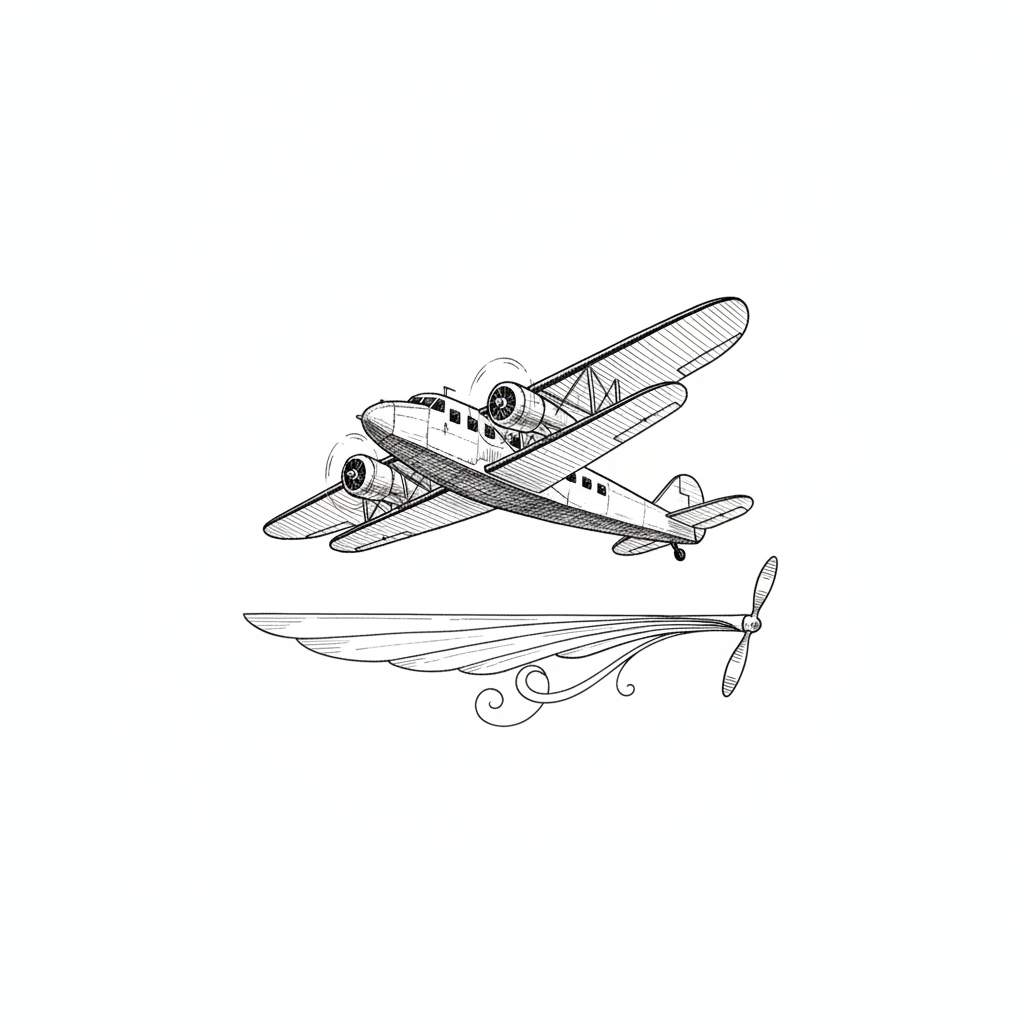
His grand experiment took tangible form in the Ford Trimotor, an aircraft affectionately nicknamed the "Tin Goose." This machine, with its distinctive corrugated duralumin skin and three radial engines, became the workhorse of early commercial aviation, bridging vast distances and carrying passengers and mail with an unprecedented sense of reliability. It was more than just an airplane; it was a physical manifestation of Ford's belief that flying could be domesticated, made predictable, and integrated into the fabric of everyday life, much like his automobiles.
This essay will journey through Ford's audacious venture into the heavens, exploring the deep-seated motivations that drove a man rooted in the earth to cast his gaze skyward. We will delve into the pioneering engineering that birthed the Trimotor, transforming the perception of flight from a perilous stunt to a practical mode of transport. Beyond the aircraft itself, we will examine Ford's comprehensive efforts to establish the very infrastructure necessary for a viable air travel industry—from advanced airports to crucial navigation systems. Finally, we will trace the Trimotor's impactful, yet ultimately constrained, reign and the complex factors that led to Ford's eventual withdrawal from aircraft manufacturing, ultimately assessing the profound, though often understated, legacy he left on the enduring story of flight.
The Visionary's Leap: Henry Ford's Entry into Aviation
Chapter 2
Henry Ford, an industrialist known for an unwavering commitment to efficiency and accessibility, found himself drawn to the skies not merely by curiosity, but by a deeper conviction forged in the fires of World War I. During the conflict, his factories had churned out thousands of Liberty aircraft engines, providing Ford a close-up view of aviation's potential, albeit in a military context. He saw the inherent danger, the reliance on flimsy wood-and-fabric designs, and the public's understandable apprehension, but also glimpsed a future where flying could be as commonplace and reliable as driving a car. This vision wasn't about thrill-seeking; it was about applying the principles of mass production and safety that had democratized the automobile to an entirely new realm of transport.
The pathway to realizing this ambition became clearer with the emergence of William B. Stout, a pioneering engineer who championed all-metal aircraft construction. Stout, much like Ford, believed in robust, durable designs, and his Stout Metal Airplane Company had already produced innovative aircraft with corrugated duralumin skins, a stark contrast to the prevailing timber and cloth fuselages. Recognizing a kindred spirit and a technological advantage, Ford, with the significant encouragement and financial backing of his son Edsel, moved to acquire Stout's company in 1925. This wasn't a casual investment; it was a strategic declaration of intent, signaling Ford's serious commitment to entering the nascent and often chaotic world of aviation.
The acquisition of Stout Metal Airplane Company was more than just buying a factory; it was integrating Stout’s expertise and his radical design philosophy directly into the Ford industrial empire. Edsel Ford, as president of the new aviation division, played a critical role in nurturing this ambitious venture, providing the internal advocacy and financial resources needed to transform Stout’s experimental designs into commercially viable aircraft. Henry Ford himself articulated his mission clearly, stating, "The first thing that must be done with aerial navigation is make it fool-proof . . . What the Ford Motor Company means to do is prove whether commercial flying can be done safely and profitably." This statement underscored his profound motivation: to overcome the twin hurdles of public fear and economic uncertainty, much as he had done with the automobile decades earlier.
The first thing that must be done with aerial navigation is make it fool-proof . . . What the Ford Motor Company means to do is prove whether commercial flying can be done safely and profitably.
Forging the 'Tin Goose': Engineering Innovation and Public Trust
Chapter 3
The Ford Trimotor, often affectionately called the "Tin Goose" or "Flying Washboard" due to its distinctive appearance, was a direct answer to the fundamental challenges plaguing early air travel: safety, durability, and passenger comfort. Its very essence, an all-metal construction crafted from corrugated duralumin, represented a radical departure from the flimsy, fire-prone wood and fabric designs that dominated the skies of the 1920s. This choice of material, inspired by German Junkers designs, bestowed upon the Trimotor an inherent strength and resistance to weather and wear that its predecessors simply lacked. The corrugated skin wasn't just aesthetic; it added rigidity and structural integrity without a significant weight penalty, allowing for a robust airframe capable of withstanding the rigors of frequent commercial operation.
Perhaps the most immediately compelling innovation, and the one that most directly addressed public apprehension, was the aircraft's three-engine configuration. In an era where engine reliability was a constant gamble, the prospect of a single-engine failure often meant disaster. The Trimotor’s design, incorporating two engines mounted under the wings and one in the nose, provided a crucial layer of redundancy. If one engine faltered, the aircraft could continue its flight, often to a safe landing, on the remaining two, or even one, engines. This multi-engine safety net was not merely a technical detail; it was a psychological reassurance, transforming the perception of air travel from a high-stakes gamble into a calculable risk, fundamentally building the public trust necessary for commercial aviation to thrive.
Beyond the critical structural and safety features, the Trimotor elevated the passenger experience to an entirely new standard. Its fully enclosed cabin, a significant departure from the open cockpits of earlier aircraft, offered protection from the elements, noise, and vibration. Passengers, typically numbering between eight and seventeen depending on the model, could travel in relative comfort, seated in wicker chairs, often with large windows to view the landscape below. This focus on the passenger, combined with the aircraft’s respectable performance metrics—cruising speeds of up to 150 miles per hour and reliable operational range—underscored Ford’s vision of air travel as a legitimate, comfortable, and efficient mode of transportation, rather than a mere spectacle. The Trimotor was not just an aircraft; it was a carefully engineered statement about the future of flying.
Beyond the Aircraft: Ford's Blueprint for Aviation Infrastructure
Chapter 4
Henry Ford's ambition for aviation stretched far beyond merely producing aircraft; he envisioned and actively built the foundational infrastructure necessary to support an entirely new transportation system. He understood that without reliable ground facilities, navigation aids, and communication systems, even the most robust aircraft would struggle to achieve commercial viability. His Dearborn, Michigan, site became a living laboratory for this holistic vision, transforming into a model for what a modern airport should be.
At the heart of this comprehensive plan was Ford Airport, which pioneered several critical innovations. In December 1928, it boasted the world's first concrete runway, a significant advancement over muddy fields or gravel strips, enabling safer and more consistent takeoffs and landings in all weather conditions. But the airport was more than just a runway; it featured integrated passenger terminals, hangars designed for efficient maintenance, and even its own weather station. This meticulously planned environment was not just for Ford’s own operations but served as a blueprint for airports across the nation, demonstrating how intelligent design could foster reliability and efficiency in air travel.
Ford’s influence also extended into the realm of aerial navigation and communication, pioneering technologies that made flight more predictable and secure. His team developed early radio beam navigation systems, which provided pilots with crucial directional guidance, allowing for more precise routes and greater reliability, especially in adverse weather conditions. Concurrently, they worked on air-to-ground communication technologies, establishing a vital link between aircraft and ground control. These innovations enhanced operational control and safety, transforming the chaotic "fly by the seat of your pants" ethos of early aviation into a more controlled and systematic operation, further solidifying Ford's commitment to legitimizing air travel in the public consciousness.
Taking Flight: The Trimotor's Dominance in the Golden Age of Aviation
Chapter 5
The Ford Trimotor did more than simply carry passengers and mail; it became the visible, tangible symbol of early commercial air travel's promise, profoundly shaping the nascent industry and public perception throughout the 1920s. Its rugged dependability and multi-engine safety features made it an instant favorite, leading to its rapid adoption by virtually all the burgeoning major U.S. carriers. Airlines like Transcontinental Air Transport (TAT), a precursor to TWA, made the Trimotor the backbone of their pioneering coast-to-coast services, which often combined air travel segments with overnight rail journeys. Similarly, Pan American Airways deployed Trimotors for its inaugural international scheduled airmail and passenger flights, connecting Key West to Havana in 1927, proving the aircraft's suitability for longer, overseas routes.
The credibility of the Trimotor was further amplified by none other than Charles Lindbergh, the aviator whose solo transatlantic flight had captivated the world. Lindbergh became a vocal advocate for the Ford aircraft, lending immense prestige to the burgeoning commercial aviation movement. His endorsement, coupled with his push for more powerful engines, notably the Pratt & Whitney Wasp, led to the development of the improved 5-AT Trimotor variant. This collaboration demonstrated Ford's responsiveness to industry needs and reinforced the aircraft's reputation for reliability and performance.
Beyond scheduled passenger and mail services, the Trimotor's robust design and versatility found it deployed in a remarkable array of applications. The U.S. military, including the Army, Navy, and Marines, adopted it for transport and reconnaissance. Corporations acquired Trimotors for executive travel, streamlining business operations across vast distances. Perhaps most famously, a Trimotor, modified with skis, carried Commander Richard E. Byrd and his crew on their historic first flight over the South Pole in 1929, an expedition that showcased the aircraft's incredible durability and range under extreme conditions. This diverse adoption cemented the "Tin Goose" not just as an airliner, but as a multi-talented workhorse that catalyzed the Golden Age of Aviation.
Wings of Fortune, Winds of Change: The Sunset of Ford Aviation
Chapter 6
Despite its initial dominance and significant contributions, the Ford aviation venture, like many ambitious endeavors, eventually faced an confluence of economic forces, technological shifts, and internal challenges that led to its cessation. The devastating onset of the Great Depression in 1929 delivered a crippling blow. As the nation plunged into economic despair, discretionary spending, including on nascent air travel, evaporated. Aircraft sales plummeted, and Ford's aviation division, which had initially been a passion project, began incurring severe financial losses. By 1933, these losses totaled an estimated $10.3 million, a staggering sum at the time, which ultimately made the continued operation of the division unsustainable for the Ford Motor Company.
Concurrently, the Trimotor, despite its innovative beginnings, was rapidly falling behind in the face of relentless technological progress. Ford's initial reluctance to continually update and streamline the aircraft's design, particularly its speed and efficiency, meant that competitors were quickly catching up and then surpassing the "Tin Goose." Newer, more aerodynamically advanced aircraft, such as the all-metal monoplane Boeing 247 (introduced in 1933) and the revolutionary Douglas DC-2 (1934), offered significantly faster cruising speeds, greater passenger comfort, and improved operating economics. These modern designs, often featuring retractable landing gear and more powerful, cowl-enclosed engines, rendered the corrugated duralumin and fixed landing gear of the Trimotor largely obsolete within a few short years.
Several other factors contributed to Ford's withdrawal. The company faced patent infringement claims from German aircraft manufacturer Junkers, which limited its ability to export the Trimotor to European markets and potentially recoup some of its investments. Furthermore, Henry Ford's personal interest in aviation waned significantly following the tragic failure of his "Ford Flivver" personal aircraft project. The prototype crashed in 1928, killing his personal pilot, Harry Brooks, a deeply personal blow that reportedly dampened Ford's enthusiasm for direct involvement in aviation. By 1933, with the economy in ruins, competitors surging ahead, and mounting losses, the decision to halt aircraft production became an unavoidable one, marking the end of Ford's direct foray into the skies.
An Enduring Echo: Ford's Unintended Aviation Legacy
Chapter 7
Though Henry Ford's direct aircraft manufacturing ceased relatively quickly, his venture into aviation left an indelible and multifaceted legacy that reverberated through the industry for decades. The Ford Trimotor, despite its eventual obsolescence, remains an iconic symbol of early commercial aviation. Its distinctive corrugated metal skin and robust multi-engine design are instantly recognizable, representing a pivotal moment when air travel began its transition from a dangerous novelty to a reliable mode of transport. Several Trimotors are meticulously preserved in museums, including the Smithsonian, and a few even remain airworthy, gracing airshows and offering nostalgic flights, a testament to their enduring historical and cultural significance.
More profoundly, Ford's foray into aviation demonstrated the immense potential of applying mass production techniques to aircraft manufacturing. While the Trimotor itself wasn't mass-produced on the scale of the Model T, the infrastructure and methodologies developed by Ford's aviation division laid crucial groundwork. This expertise would prove invaluable years later when Ford Motor Company made a colossal contribution to the Allied war effort during World War II. At its sprawling Willow Run plant, Ford applied its assembly line genius to produce a staggering 8,685 B-24 Liberator bombers and over 4,000 Pratt & Whitney R-2800 engines, setting unprecedented standards for aircraft production efficiency and volume. This wartime feat stands as a powerful, if indirect, testament to the manufacturing principles refined during the Trimotor era.
Finally, Ford's holistic approach to legitimizing air travel left a lasting imprint on aviation infrastructure. The innovations pioneered at Ford Airport in Dearborn, such as the world's first concrete runway and integrated passenger terminals, served as foundational models for subsequent airport development around the globe. His company's contributions to early radio beam navigation systems and air-to-ground communication were essential in enhancing flight reliability and safety, transforming the nascent industry from a wild frontier into a more organized and predictable domain. Even though Ford's planes eventually left the skies, his blueprint for how an entire air transportation ecosystem should function continued to guide its evolution.
Conclusion
Chapter 8
Henry Ford, the visionary who put the world on wheels, embarked on an equally ambitious, yet ultimately transient, journey into the skies. His story in aviation is not one of sustained manufacturing dominance but rather one of profound, almost paradoxical, impact. Despite withdrawing from direct aircraft production in 1933, Ford fundamentally legitimized and shaped early commercial air travel, moving it from the realm of daredevilry into practical consideration for the public. The Ford Trimotor, the "Tin Goose," was more than just an airplane; it was an embodiment of safety and reliability, paving the way for public acceptance of flight.
The contrast between Ford’s undeniable success in pioneering aviation safety and infrastructure, and his eventual inability to sustain direct manufacturing, offers a compelling lesson. He mastered the challenge of building public trust and laying the groundwork for a viable industry, but struggled to maintain momentum in the face of rapid technological evolution and the devastating economic downturn of the Great Depression. The aircraft market, unlike automobiles, demanded constant, expensive updates and a smaller, more specialized production scale, which ultimately ran counter to Ford's mass-market ethos.
Ultimately, Henry Ford’s aviation story is a testament to the power of visionary ambition, even when the direct commercial outcome is less than what was initially hoped for. His contributions to multi-engine, all-metal aircraft design, pioneering airport infrastructure, and essential navigation and communication technologies left an indelible mark. Even as his planes gave way to sleeker, faster competitors, the principles he championed—safety, accessibility, and robust engineering—endured. Ford's "failed" venture in aviation wasn't a failure in its broader impact; it was a critical, foundational chapter that accelerated the very revolution it sought to lead, cementing his legacy as a titan who, for a brief, glorious period, helped humanity find its wings.
Bibliography
- simpleflying.com. Source
- historynet.com. Source
- ford.com. Source
- thehistoryblog.com. Source
- faa.gov. Source
- wikipedia.org. Source
- thehenryford.org. Source
- grokipedia.com. Source
- readyfortakeoffbook.com. Source
- theautopian.com. Source
- jalopnik.com. Source
- slashgear.com. Source
- sdsu.edu. Source
- aviationmuseum.eu. Source
- sandiegoairandspace.org. Source
- eaa.org. Source
- youtube.com. Source
- hagerty.com. Source
- detroithistorical.org. Source
- stoutaviation.com. Source
- theaviationist.com. Source
- study.com. Source
- 1920-30.com. Source
- palatinate.org.uk. Source